
Searching Hancock County Criminal Dockets
Hancock County splits its criminal docket records across several paths. The Delta criminal form is a paid Circuit Court index. It works best when a subscriber has a case number, party name, style field, date, book and page, or file number. Circuit and County Court electronic records also run through the Mississippi Electronic Courts system. Remote public access comes through PAMEC. A misdemeanor, a preliminary felony matter, or a citation may instead sit with Hancock Justice Court. Or it may sit with the municipal court that issued it.
Begin with the case notice, citation, or caption. It names the court and gives you the best number to hand a clerk. Delta's documented workflow is to fill one field and submit. Blanketing every box is not the intended approach. The Justice Court nCourt route is narrower still. It takes a citation or case number, not a criminal party-name search. When one layer returns nothing, that is a cue to check the issuing court. It is not proof that no criminal case exists.
- Identify whether the notice came from Circuit, County, Justice, Bay St. Louis, Diamondhead, or Waveland court.
- For a known Circuit or County matter, use the case number first in the Delta index or select the participating court after PAMEC registration.
- For Delta, try one field at a time. Use a party name in the documented Last, First form only when a case number is unavailable.
- For Justice Court, use the citation or case number channel and contact the clerk for the underlying case record.
- Confirm a setting, signed order, or certified copy with the clerk who keeps that court’s file.
Note: An index and a full court file serve different purposes, so the clerk should confirm any item that controls an appearance or a legal deadline.
Delta’s Hancock County Criminal Docket Form
The Delta criminal form shows the same field family as its civil counterpart. There is no free public docket sample. Party Name and the styled-party fields are plain text boxes. Filed Date and Final Disposition Date sit in separate month, day, and year boxes. Docket Book/Page and File Number serve as extra local index references. Submit and Clear are the only controls. No visible dropdown, sort, export, or pagination option appears. Delta's county home notes that a subscription is required. It also warns that uploads can lag the courthouse record.
| Delta field | Control | Documented format | Use |
|---|---|---|---|
| Party Name | Text | Last, First; up to 40 characters | Search one known party field. |
| Case Number | Text | Up to 14 characters | Best starting point when known. |
| Styled Defendant or Plaintiff | Text | Up to 40 characters | Caption-role fields in the index. |
| Filed or disposition date | Three text boxes | Month, day, year | Use a known date, one field at a time. |
| Docket Book/Page or File Number | Text boxes | Book/page up to four characters; file number up to seven | Legacy or clerk-index reference. |
The official Delta criminal-search interface presents these fields on its public page. Its layout explains why one precise entry often beats a broad name search.
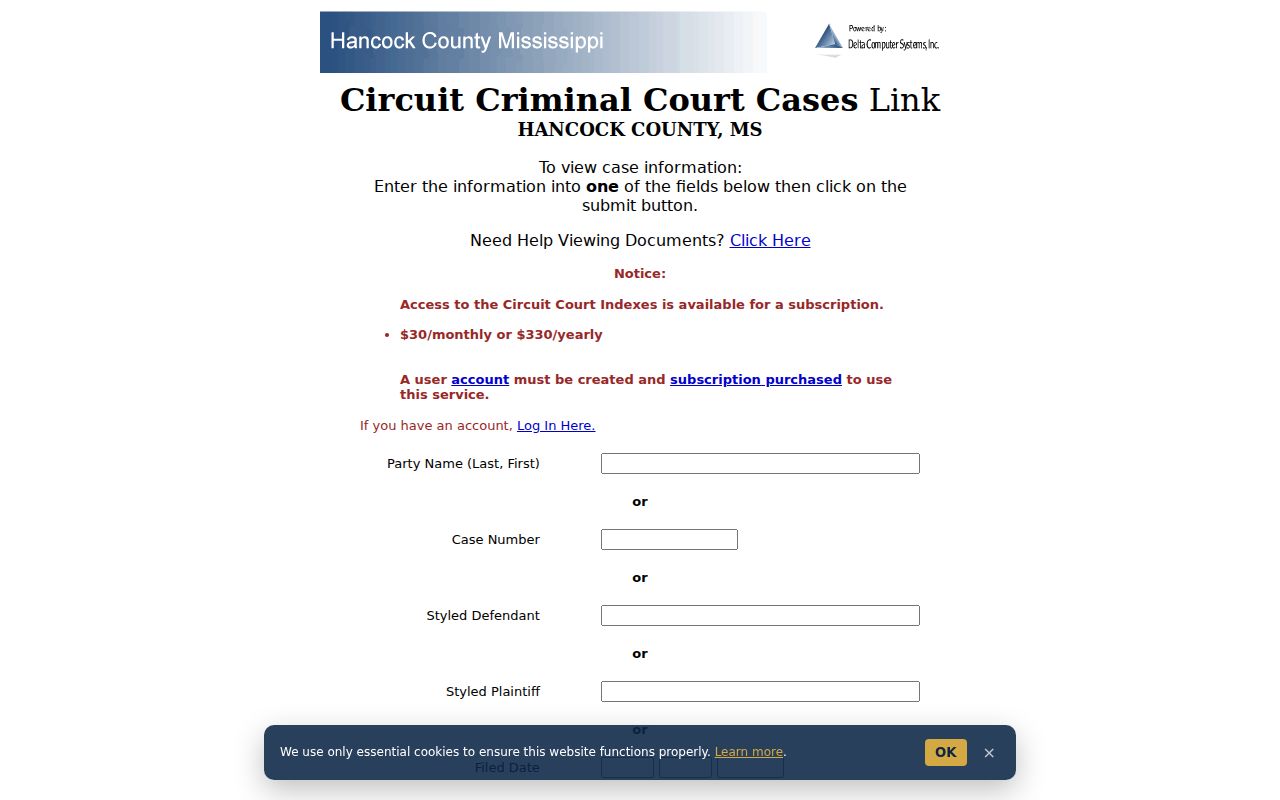
What that page shows is an access form, not an authenticated case result. Viewing it proves nothing about any document or event in a particular case.
Inside a Hancock County Criminal Docket
A docket sheet is a chronological register of case activity. It is not automatically every document in the file. It is also not a certified copy. In Hancock County, the dependable inventory comes from the visible forms. The MEC flag material adds the rest. A criminal entry can show the court, case number, caption-role information, filing and final-disposition dates, a charge or case type, entry dates and text, hearing settings, order links, and status flags. What you see depends on the court and your access level.
| Case number | The court-assigned search key. Delta accepts a number of up to 14 characters, but the research did not establish one statewide Hancock format such as YYYY-CR-#####. |
|---|---|
| Party and caption role | Party Name, Styled Defendant, and Styled Plaintiff are indexed fields. They identify a caption role, not a final outcome. |
| Dates | Filed Date records entry into the clerk’s system. A setting date is different. Final Disposition Date should be checked against the order or judgment. |
| Docket activity | Chronological event dates and text may show filings, settings, motions, plea activity, orders, or disposition information. |
| Status or access flag | Flags such as CLOSED, BOUND OVER, SEALED, or EXPUNGED are search clues. They do not replace the docket entry or signed order. |
For Circuit and County Court, the Second Circuit MEC information page lists the public flag terms and confirms Hancock participation. Need proof of a result? Ask the Circuit Clerk for the specified order or certified copy rather than treating an index row as the final record.
Hancock County Criminal Docket No-Result Steps
A no-result criminal search calls for a court-by-court response. Check spelling first. Then try the case number, party field, or one date field the selected system accepts. Next, pin down where the charge began. It may be Justice Court, a city municipal court, County Court, or Circuit Court. A Delta result cannot stand in for a Justice or municipal record. For a Justice Court citation, use the citation or case-number channel. Then contact the clerk for the actual court file.
For a participating Circuit or County case, PAMEC may be the electronic route after registration. For an indicted or filed Circuit matter, the Circuit Clerk can locate a docket, order, or certified copy. The court and case number are what you supply. The county public-records form is a defined general fallback. A clerk-directed request is better when you need a court-certified document. A blank result can also reflect a transfer, archive status, sealed record, expunction, or ordinary update lag.
Note: Verify a missing criminal search result with the issuing court. Do this before drawing any conclusion about the case or its status.
Bound Over in Hancock County Criminal Dockets
`BOUND OVER` carries a narrow procedural meaning. In Hancock County, misdemeanor charges and preliminary felony proceedings may begin in Justice Court. They may also begin in a municipal court. A felony bound to the grand jury can then move to Hancock County Circuit Court after indictment. The flag only describes movement toward that felony process. It is not a conviction, a sentence, or a finding of final disposition. The earlier Justice or municipal docket can still matter. Use it when you need the first filing or a preliminary setting.
- Arraignment Pending
- A first appearance or plea stage remains incomplete. The flag does not prove that a plea was entered.
- Plea Pending
- A plea event is pending. It is not a conviction.
- Conviction Order TBE
- An order is to be entered. Request the signed order before relying on the status.
- Nolle Pros Pending
- A non-prosecution event or order is pending. It is not the same as a final nolle prosequi order.
- Capias or bench warrant pending
- Status can change after an index update. Contact the court or clerk for the current status.
Status flags carry their own vocabulary. The Second Circuit Court Information page spells out those terms for anyone reading a Hancock Circuit or County Court entry. Treat it as a decoder, not a substitute for the court's own directions.
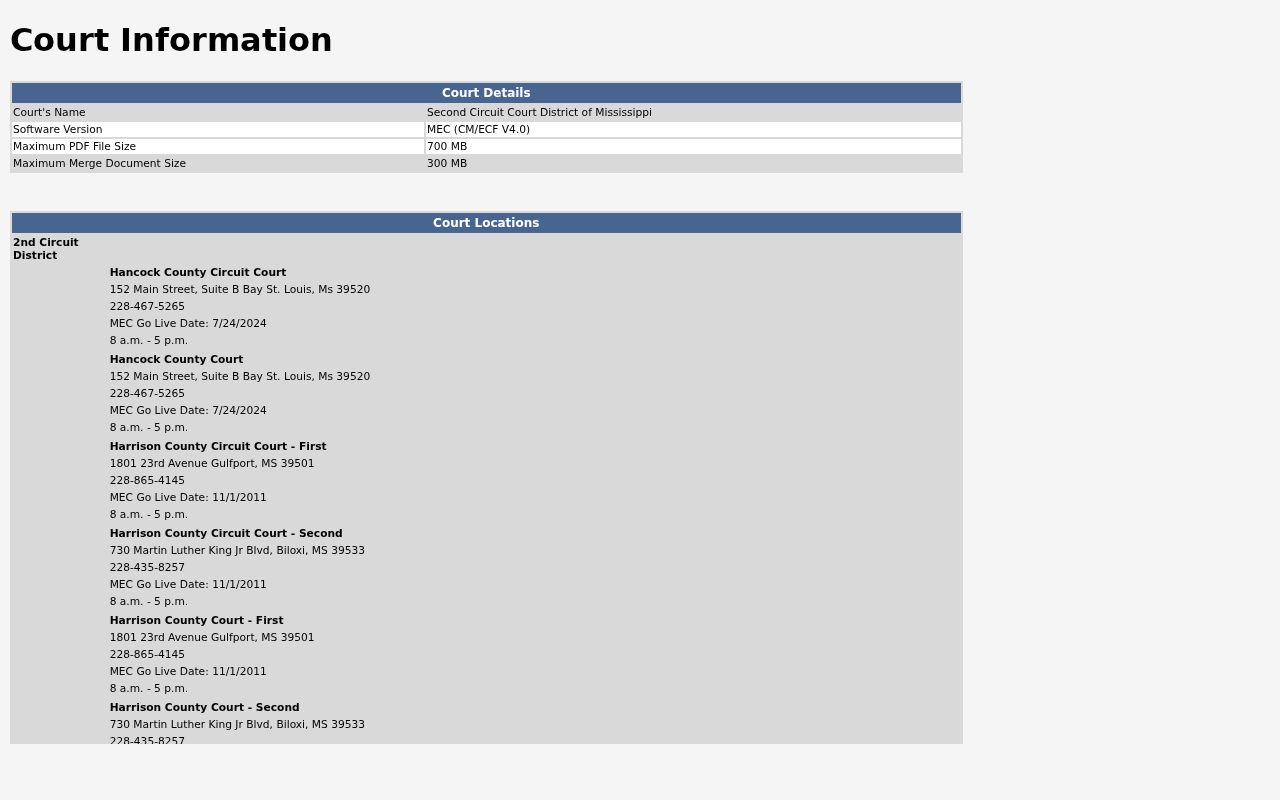
Knowing the labels makes an entry easier to read. Still, the case record held by the court that owns it remains the thing to verify.
How a Criminal Case Moves
Not every Hancock criminal docket travels the same road. A county or city officer can start a case with a citation. A charge can also be filed in Justice Court or Municipal Court. Felony matters often show early proceedings in a preliminary record before any grand jury acts. Once an indictment lands, the case moves to Circuit Court as the trial forum. The Circuit Clerk then builds and keeps that case file. County Court holds only limited criminal jurisdiction. Its records stay separate from anything a city or Justice Court created. An appeal does not simply edit the old entry. It opens a new docket of its own.
Docket flow: Charging event or citation › Justice or Municipal proceeding when applicable › preliminary hearing or grand-jury action for a felony › Circuit or County Court filing › arraignment › pretrial setting › plea or trial › order, disposition, and sentencing when entered.
This explains why a Delta search alone may miss a new charge or a lower-court matter. Court staff will ask for the issuing court and the case number. Then they can pull the right file. The Hancock County Courts page lists local contacts for Justice, Circuit, and Chancery. Each municipal clerk keeps a separate city docket. Note: A hearing date or flag can shift after an index updates, so confirm the current setting with the court that set it.
PAMEC Access to Hancock County Criminal Dockets
Hancock County Circuit Court and Hancock County Court joined the Second Circuit MEC site. That happened on July 24, 2024. PAMEC is the public registration layer for Mississippi's electronic courts. Think read-only remote access rather than one anonymous statewide search box. Sign-up offers Attorney, Non-Attorney, and Firm Administrator user types plus an image or security check. Attorney or non-attorney registration runs $10 per year. Users must accept a terms agreement. Only then does remote access open. A result can still be limited by a sealed, restricted, or nonparticipating court record.
Fees do not stop at registration. PAMEC bills $0.20 for each page a search returns, whether or not you open, print, or download it. A no-match search counts as one page. Statements arrive quarterly, and renewal follows the anniversary date. The terms also bar automated collection built to dodge billing. The PAMEC login route is where registered remote users begin.
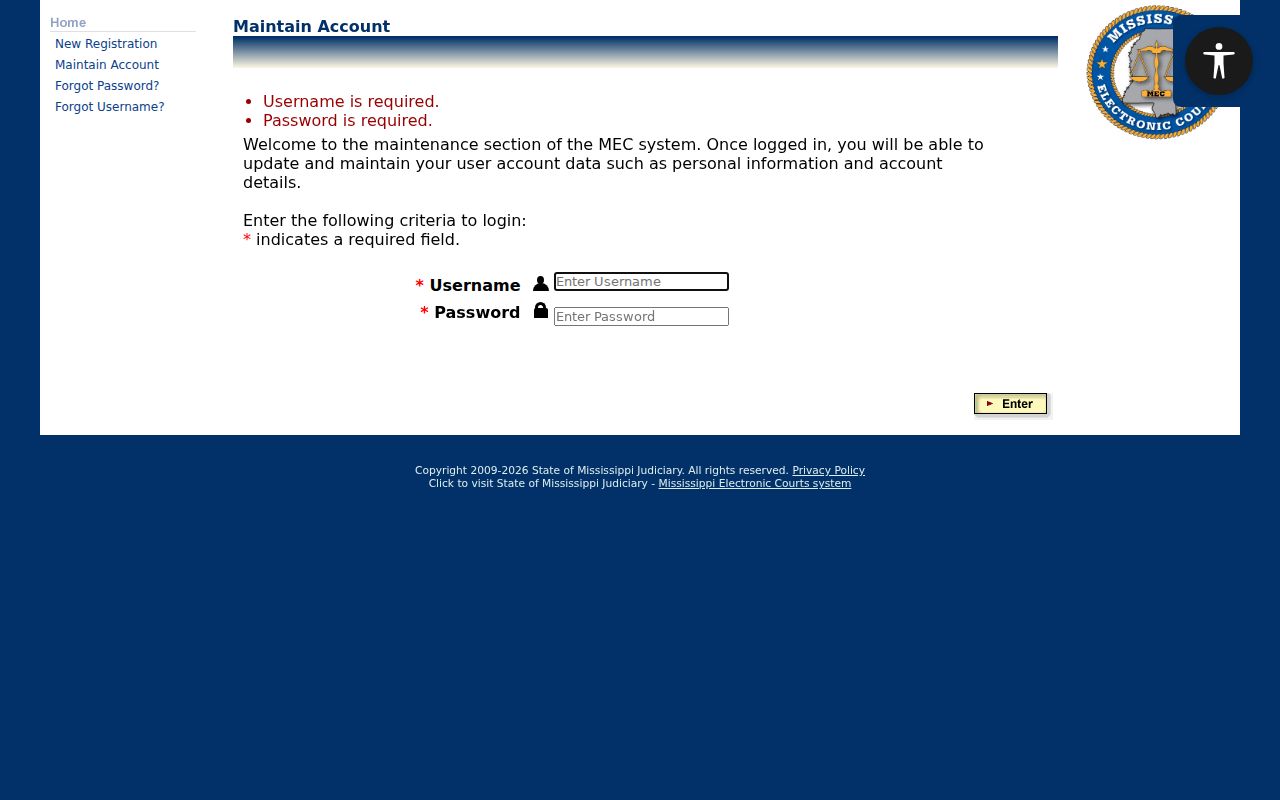
Remote access sits beside the clerk's counter. It does not replace going to the court that holds the criminal file.
Courts That Hold Criminal Dockets
Venue drives any Hancock County criminal docket search. Misdemeanors, preliminary felony matters, and most county or agency citations sit with Justice Court. Call its clerk at 228-467-5573. Or run the county nCourt channel by citation or case number. Bay St. Louis, Diamondhead, and Waveland each run a Municipal Court. Each handles its own ordinance, traffic, and violation-level misdemeanors. Bay St. Louis offers a Tyler search route. Diamondhead asks that date questions go to its court by phone. Waveland works through an nCourt payment or login path.
Felony dockets after indictment, general trial matters, and certain appeals belong to Circuit Court. The Circuit Clerk keeps both Circuit and County Court files, civil and criminal. The District Attorney sits at 152 Main Street, Suite D, in a separate public office; the Circuit Clerk is in Suite B. The prosecutor does not hold the docket copy. For that split, the Hancock County District Attorney page names the separate office route.
Hancock Circuit and County Court also run an electronic-court layer. The Second Circuit MEC home is that filing system. It covers these two courts only. It is not a combined index of city and Justice Court criminal cases.
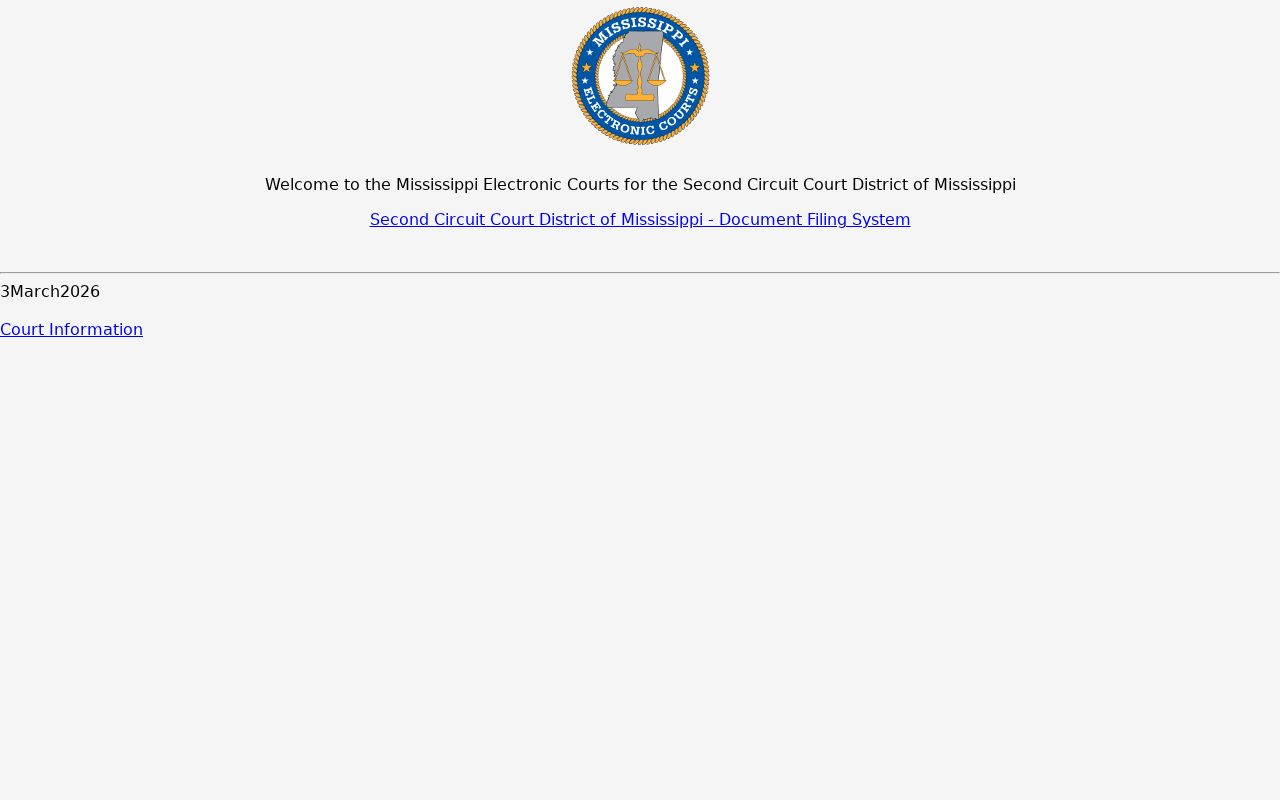
Start with the court name. That habit separates a Circuit or County record from a Justice Court or municipal case with similar parties and dates.
Hancock County Criminal Docket Counsel Route
Appointed counsel runs through the Circuit Clerk. It is a court process rather than a docket-search result. The petition must be sworn before the court, an appropriate clerk, or a notary. Expect to give a current phone number, a complete address, assets and debts, and income. A jailed defendant usually gets an initial appearance within 48 hours. Someone out on bond can pick up the petition in person or by mail. It can be returned either way.
The clerk mails appointment news to the address on file. Report any address change. Filing the petition promises no outcome. It never stands in for advice from the court or an attorney. For local filing details, the Circuit Clerk’s official page carries the current instructions.
The prosecutor's office stays separate from the clerk who keeps the criminal docket. The Hancock County District Attorney page gives that office's own contact and role.

Keeping the offices straight matters. A prosecution contact is not a request for the clerk-held case file, docket, order, or copy. Note: A petition for appointed counsel carries its own filing requirements, so do not assume eligibility from a financial or docket status field alone.
Sealed Dockets and Public Access
Open access has limits in Mississippi. A Hancock County criminal docket is not always fully public. The state Public Records Act does grant inspection and copying. But it allows exemptions and lets offices set reasonable procedures. MEC rules apply here. Remote electronic access to civil and criminal records goes only to PAMEC subscribers. Anyone else can view the files electronically at the clerk's office during regular hours. Copy fees apply. Expunction is treated separately from routine public access, and Youth Court records are confidential.
A blank search result tells you little. So does an `EXPUNGED` label or a case number you can still see. Second Circuit flags can read SEALED, EXPUNGED, Minor_Child, or another limit. Youth Court material moves through its own confidential channel. When a docket looks sealed, a document seems restricted, or an expunction is in question, ask the clerk directly. The clerk can tell you what order, process, identification, or fee is authorized for that case. Never guess at a record's status from an old index entry.
Mississippi access rules:
Miss. Code §25-61-5 permits inspection and copying of public records subject to exemptions and reasonable procedures.
Miss. Code §25-61-7 addresses actual search, review, copying, and delivery costs for public-record requests.
Miss. Code §99-19-71 supplies the statutory expunction route and should be checked in the current code for eligibility limits.
Miss. Code §43-21-261 is reflected in the Youth Court confidentiality guidance.